
The Next Big Thing in Culturally Responsive Teaching is Here.
It’s not a new idea at all. It is an ancient idea, one that has clung to the sidelines of our educational system for far too long. It has been waiting ever so patiently for recognition, acknowledgment, and a ready audience. It has been dancing in the background with poise and conviction, leaving marks on the walls, embedding cyphers in classrooms employing hip-hop pedagogy, and slipping into assessments through lyrics and rhymes. The next big thing in Culturally Responsive Teaching is—and has always been—the Cultural and Contemporary Arts.
Adored by millions yet largely ignored as a viable partner in the development of learners, the arts stand as an undeniable ally to culturally responsive teaching, providing a pulse for sustaining practice and pedagogy in our schools.
Culturally Responsive Teaching and Learning Through the Arts (CRTLA) is defined as the deliberate utilization of the knowledge, methods, forms, and purposes that the arts and culture provide to build cognitive capacity for independent learning and collective wisdom. Educators who commit to culturally responsive teaching must prioritize the role of the arts, which effectively develop this cognitive capacity and deepen engagement.
Sustaining practice and pedagogy in CRTLA supports the growth of teachers who aspire to design lessons that love their students. It calls for the creation of meaningful units of instruction that center student inquiry, confront racialized and socialized systems of harm, and provide students with opportunities to think creatively and expansively in pursuit of academic goals.
A Mind for the Arts
The human brain is designed to learn through the arts. We have always been artists. The primary way our brain learns? Through story. Beyond that? Through the visual and performing arts—theater, movement, dance, music, clay, paint, and the boundless expressions of human creativity.
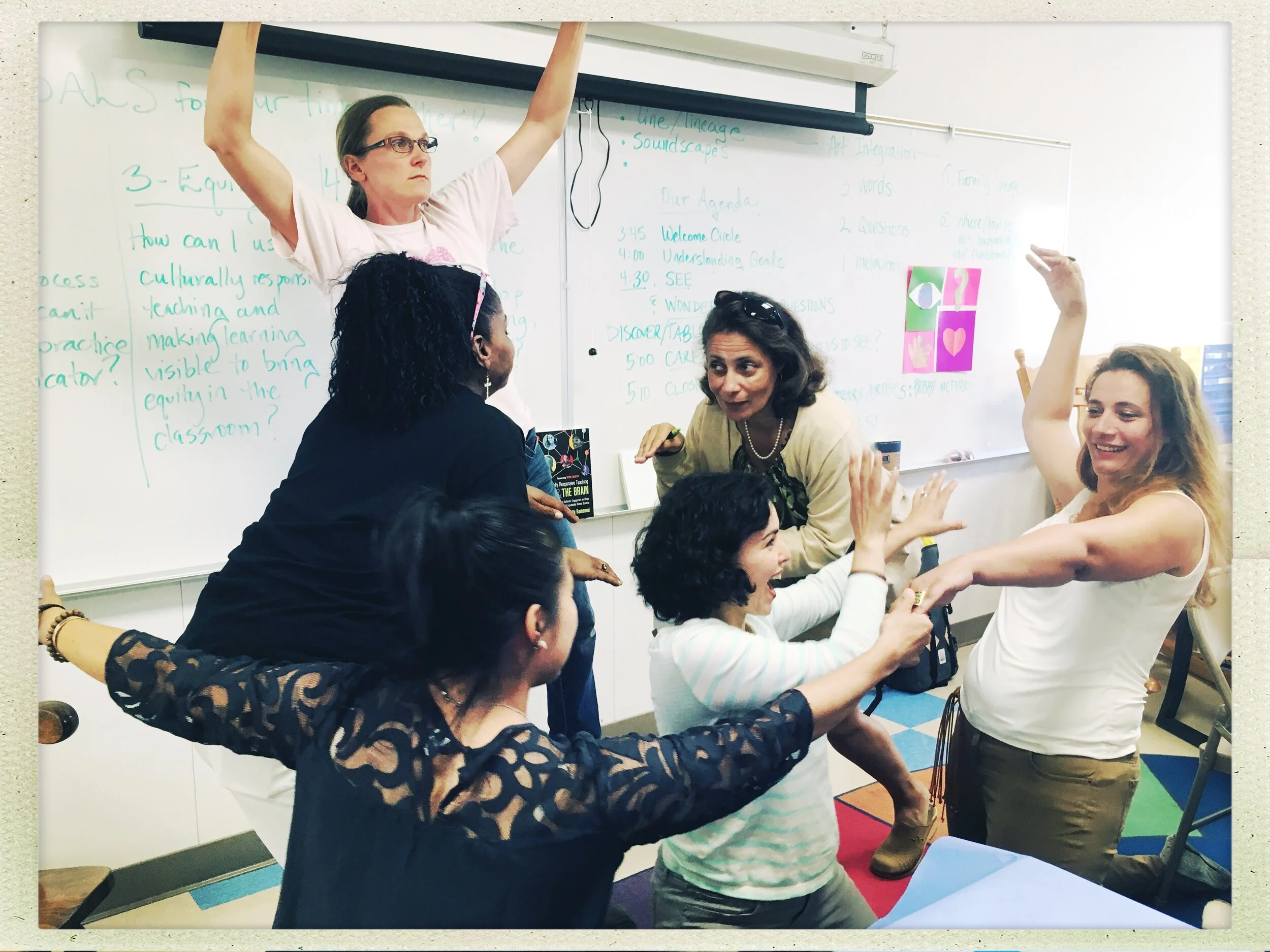
Introduction to the Contemporary Artist
When I first began my journey into arts integration, the world of contemporary arts was foreign to me. I had taken an art history class in college and mistakenly assumed that modern art and contemporary art were the same. I lumped Jackson Pollock, Joan Miró, Pablo Picasso, and others into the category of contemporary art. It wasn’t until a friend who was an art teacher explained the term to me that I finally understood.
The realization was like tasting ice cream for the first time. A contemporary artist observes the world and makes intentional choices to solve problems or draw attention to issues through their work. I was introduced to artists like Mark Dion, Do Ho Suh, LaToya Ruby Frazier, and Ai Weiwei—artists whose work transfixed me and inspired a deep artistic research process. Learning about contemporary artists reshaped my understanding of teaching, thinking, and the arts.
No Small Thing
Transforming practice is no small feat. Teachers are inundated with expectations and demands. Implementing new concepts can feel like the tipping point that leads to an exasperated "screw it all" mentality.
In times of survival (which is all too real in today’s educational climate), teachers often seek strategies they can apply immediately. While CRTLA includes tangible strategies, techniques, and direct classroom applications, it also necessitates deep study and persistence. To move from novice to internalized pedagogy, educators must unlearn ingrained patterns and embrace new, more responsive approaches. This work requires grace—both for ourselves and for the learning process.
Ancient History Can Stir Your Soul
In 2017, I sat in a classroom in Mexico, listening to cultural anthropologist Alberto Vallejo Reyna speak on the connections between ancient Mayan cosmology and contemporary life. His lecture centered on the belief in nowales (as he spelled it), a spiritual force that provides humans with a larger sense of self, connection to others, and a relationship with the cosmos.
Alberto explained that everyone must connect with their nowales—the part of themselves that understands their purpose and participation in the world. This connection, he explained, is also defined as art. To find one’s nowales is to find and be guided by one's inner artist. And that inner artist fosters an expansive understanding of self and world.
His words struck a deep chord within me. I sat in awe, affirming that the ideas I had chosen to lead in education were necessary, valid, and urgently needed.
"It is for this reason that all societies have battled with the incorrigible disturber of the peace—the artist." —James Baldwin
The Good News
The shift to Culturally Responsive Teaching and Learning through the Arts is a shift toward fostering expansive minds. Artistic thinking habits allow students to approach the world with layers of creative thought and action.
CRTLA is also a means of interrupting unconscious teaching practices. The racialized caste structures embedded in U.S. schools have produced patterns of inequity that seem as natural as the air we breathe (Wilkerson). Systemic disparities in school funding have resulted in unequal opportunities for students—shaping not only what and how they learn, but also the quality of teaching they receive.
The good news is that many educators are committed to making their lessons and curricula anti-racist. They are working to be liberatory and emancipatory in their practice. The arts are essential to this work. They must be centered as a critical component of liberatory pedagogy.
The arts hold the power to address shared histories, foster justice, and cultivate belonging. When students develop artistic thinking, they build the creative and analytical skills necessary to engage with complex texts, issues, and ideas. They learn to co-create solutions for the world around them.
A Call to Action
For too long, the arts have stood on the sidelines of education, waiting for their due recognition. It is time for a shift—a deliberate movement toward integrating culture, creativity, and the arts into the heart of teaching and learning. It is time to bring the arts fully into culturally responsive teaching.
This is not just about instruction. It is about transformation.
Mariah Rankine-Landers, November 12, 2021