
The Art of Learning: Five Essential Skills Students Gain Through Creative Practice
Did you know that creativity is a skill that can be developed—just like learning a new language or mastering the strokes of a swimmer? While some believe creativity is an innate gift, the truth is that it flourishes with practice. The arts are one of the most powerful ways to nurture and refine creative thinking, equipping students with skills that extend far beyond the studio, stage, or classroom.
Here are five transformative skills that students cultivate through creative arts practices:
1. The Power of Observation: Seeing Beyond the Surface
In a world that moves at lightning speed, the ability to pause and truly see is a superpower. Observation requires attention and awareness, engaging all the senses to focus deeply on a subject. Whether sketching a still life, composing a melody, or choreographing movement, artists must fine-tune their perception. This act of deep looking and listening sharpens students’ ability to analyze, interpret, and make meaning—skills that translate into every discipline, from science to storytelling.
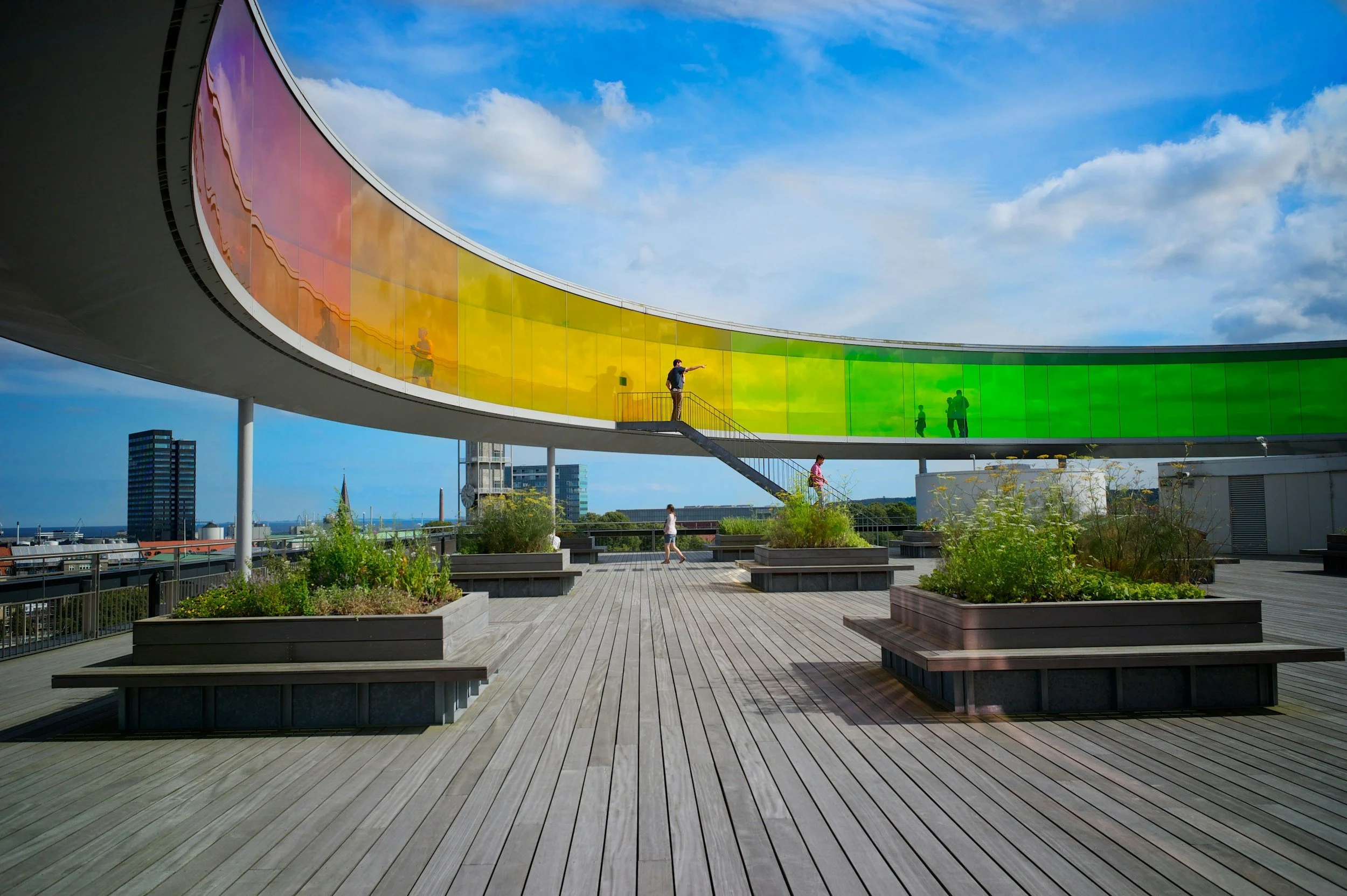
Olafur Eliasson’s Rainbow Walkway, ARoS Museum, Denmark.
2. The Call of Curiosity: Fueling the Desire to Know More
Observation and curiosity are inseparable. The more we notice, the more questions we ask. What if this brushstroke was bolder? What happens if I mix these two sounds? What stories live inside this material? Creative practice invites students into a world where 'what if' is the key that unlocks endless possibilities. Curiosity is the driver of discovery—it keeps learning dynamic, ever-evolving, and deeply personal.
3. The Joy of Inquiry: Asking Questions That Lead to Exploration
Curiosity naturally sparks questions, and the arts provide a space where questions don’t just lead to answers but to morequestions. In creative practice, inquiry is the foundation: Why does this image make me feel something? What happens if I shift my approach? How does my work connect to the world around me? Rather than hitting a dead end, students learn to embrace open-ended exploration. They develop the habit of pushing beyond the obvious, seeking deeper connections, and refining their ideas with each iteration.
4. The Power of Reflection: Looking Inward to Understand Outward
Creative practice demands that we pause. Whether stepping back from a painting, listening to a recorded performance, or revising a piece of writing, artists must reflect. This process of evaluation and self-awareness becomes second nature, teaching students how to assess their growth, recognize patterns in their thinking, and refine their work with intention. Over time, this habit of reflection extends beyond the arts, helping students navigate challenges, relationships, and decision-making with clarity and confidence.
5. The Practice of Empathy: Understanding Through Art
At its core, creative practice is about connection—understanding ideas, people, emotions, and the world through imagination and expression. Whether collaborating with peers, embodying a character, or working with new materials, students develop the ability to see from multiple perspectives. The arts create pathways for empathy, building neural connections that help learners not just to see others but to feel with them. And in today’s world, that ability to understand and hold space for others is more critical than ever.
Ready to Bring More Creative Practice Into Learning?
Creativity isn’t just about making art—it’s about shaping the way we think, learn, and engage with the world. Want quick, engaging ways to center creative practice in your learning space? Stay tuned—more inspiration is on the way!
Mariah Rankine-Landers