
Educator Spotlight: Michael Torres on Do Your Lessons Love Your Students?
Michael Torres is an educator, director, and passionate believer in the transformative power of the arts. He recently shared how Do Your Lessons Love Your Students? has become a core text in his teaching practice at Laney College in Oakland. CA.
Q: You've mentioned this is now a core text for you. Can you share why?
I'm only on page 74, but already this book has profoundly shaped my equity-based teaching. It’s helped me adjust my curriculum to promote inclusivity and more human-centered outcomes. I’ve always believed in the power of artistic research and creative inquiry to unlock students’ collective knowledge and potential. This book supports that belief and encourages curiosity, joy, and love-based teaching. It reminds me to invite students to express themselves—through envelope art, collages, dioramas, writing, drawing, and the musicality of language.
Q: How does the book relate to your understanding of the purpose of a creative educator?
Love-based teaching is at the core. To me, love and creation go hand in hand. Chaos is the canvas; love is the color, the form, and the light. When education and art come from the heart, they’re not hard—they’re joyful, fun, transformative. What might take two years to learn can sometimes happen in an hour of creative play. Love writes the blueprint for a world that creatives can build in eight weeks. And when that love is shared in performance, it transforms the community watching.
Q: How are you incorporating the book’s practices into your classroom?
It begins with love. I learn students’ names, honor their pronunciations, and listen to their stories. We open every class with their questions and close with what they’re taking away. I validate their discoveries.
I’ve invited students to write self-monologues—sometimes these reveal real-life traumas. We hold space for that. Rehearsals include conversations about real experiences, games that spark imagination, and opportunities for students to try out ideas, even when they resist mine. I allow space for their choices. That kind of love-based support fosters growth.
It’s also about truth over right or wrong. I use forgiveness—modeling how to forgive oneself and others. I help students see the connections from A to B to C through habits of learning, not just checking boxes.
Q: Which sections of the book speak most to you?
Honestly, everything I’ve read has spoken to me. It’s on my perpetual reading list—one of the few that continues to deepen my teaching and inspire what I share with students.
Q: Anything else you'd like to share?
Thank you for writing a book that belongs on every educator’s side table.
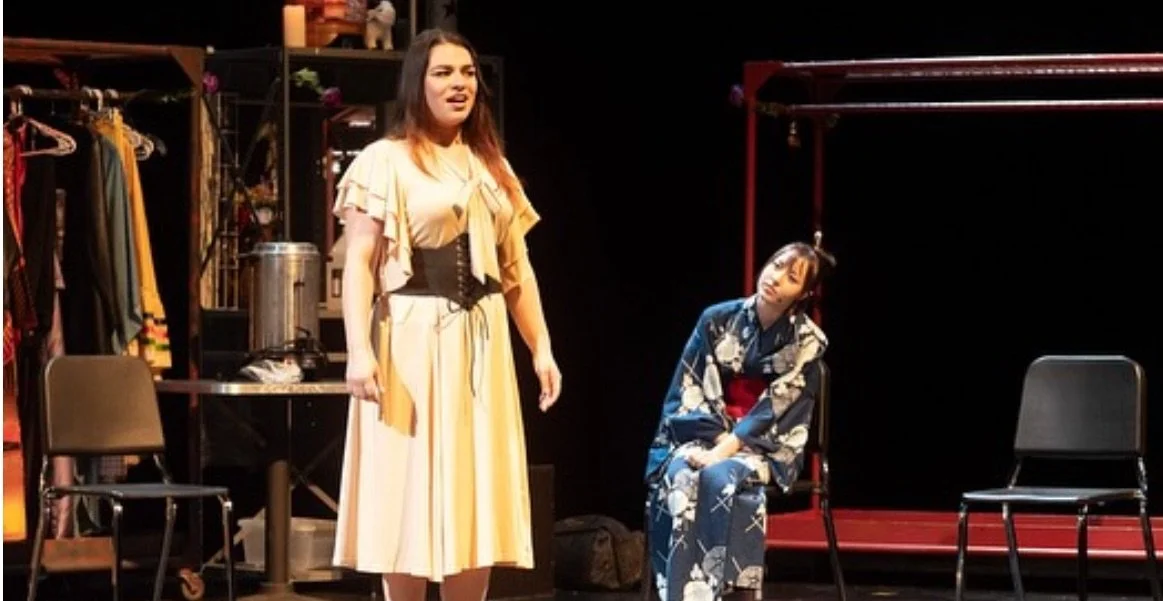
Students at Laney College rehearsing “The Cannon” written by Jessa Brie Moreno and directed by Michael Torres.